Why a Resting Metabolic Rate (RMR) Test Is One of the Most Valuable Nutrition Tools for Athletes
Athletes spend countless hours refining their training, equipment, and race strategies, yet many continue to base their nutrition on online calorie calculators. The problem is simple: most calculators provide estimates. A Resting Metabolic Rate (RMR) test provides actual measurements.
Whether your goal is optimizing race-day fueling, improving recovery, or losing weight without sacrificing performance, an RMR test can provide the precision needed to make informed nutrition decisions.
What Is Resting Metabolic Rate?
Resting Metabolic Rate (RMR) represents the number of calories your body burns at rest to support essential functions such as breathing, circulation, brain activity, and cellular repair. For most individuals, RMR accounts for approximately 60–75% of total daily energy expenditure.
RMR is measured using indirect calorimetry, which analyzes oxygen consumption and carbon dioxide production to determine how much energy your body is using. This is considered the gold standard for measuring resting energy expenditure.
Why Online Calorie Calculators Often Miss the Mark
Most nutrition apps and online calculators use prediction equations such as Harris-Benedict, Mifflin-St Jeor, or Cunningham. These equations estimate calorie needs based on variables like age, height, weight, and sex.
While these formulas may be reasonably accurate for large populations, they can be significantly inaccurate for individual athletes. Research consistently demonstrates that predictive equations frequently overestimate or underestimate actual metabolic rate, particularly in athletic populations.
The challenge is that two athletes with identical height, weight, age, and sex may have dramatically different metabolic rates due to differences in:
- Lean muscle mass
- Training volume
- Hormonal status
- Recovery state
- Genetics
- Previous dieting history
An online calculator cannot account for these factors. An RMR test measures them indirectly through your body’s actual oxygen consumption.
How RMR Testing Improves Race Nutrition
Many endurance athletes unintentionally underfuel or overfuel because they do not know their true energy requirements.
If calorie needs are underestimated, athletes may experience:
- Reduced training quality
- Slower recovery
- Increased injury risk
- Loss of lean muscle mass
- Relative Energy Deficiency in Sport (RED-S)
If calorie needs are overestimated, athletes may gain unwanted weight or experience gastrointestinal distress from excessive fueling.
Knowing your true resting energy expenditure provides a more accurate starting point for determining daily caloric requirements and race nutrition strategies. Once training expenditure is added to measured RMR, athletes can develop fueling plans based on actual physiology rather than estimates.
For endurance athletes preparing for marathons, ultramarathons, cycling events, or triathlons, this can be the difference between arriving at the starting line properly fueled or carrying a chronic energy deficit.
RMR Testing for Weight Loss
One of the most common frustrations among active adults is the belief that they should be losing weight based on what an online calculator predicts.
In reality, calorie prescriptions are only as accurate as the metabolic rate estimate behind them.
For example, if a calculator overestimates your metabolism by 300 calories per day, you may believe you are creating a calorie deficit when you are actually maintaining your weight. Conversely, if it underestimates your needs, you may unintentionally create an excessive deficit that leads to fatigue, poor recovery, muscle loss, and reduced performance.
Research has shown that predictive equations often fail to accurately estimate resting metabolic rate at the individual level, particularly among athletes and active populations.
An RMR test removes much of the guesswork by establishing your actual caloric baseline. This allows nutrition plans to be built around measured data rather than averages from a population-based equation.
Who Benefits Most from an RMR Test?
RMR testing can be especially valuable for:
- Endurance athletes preparing for races
- Athletes struggling with low energy or poor recovery
- Individuals trying to lose weight despite consistent effort
- Athletes concerned about RED-S
- Cyclists, runners, and triathletes seeking optimal fueling strategies
- Anyone wanting a more personalized nutrition plan
The Bottom Line
Training plans are individualized. Nutrition plans should be too.
A Resting Metabolic Rate test provides a direct measurement of your body’s energy needs rather than relying on generalized equations. By understanding your true metabolic requirements, you can make more informed decisions about daily nutrition, race fueling, recovery, and weight management.
For athletes and active adults seeking to maximize performance and long-term health, an RMR test offers something most nutrition calculators cannot: confidence that your nutrition strategy is based on how your body actually works. For more information about testing or to schedule a test, call 970-797-2431.
References
Balci A, et al. Current Predictive Resting Metabolic Rate Equations Are Not Sufficient to Determine Proper Resting Energy Expenditure in Olympic Young Adult National Team Athletes. Front Physiol. 2021.
O’Neill JER, et al. Accuracy of Resting Metabolic Rate Prediction Equations in Athletes: A Systematic Review and Meta-Analysis. Sports Medicine. 2023.
Thom G, et al. Validity of Predictive Equations to Estimate Resting Metabolic Rate in Females Varies by BMI and RMR. Nutrients. 2020.
Cooper JA, et al. Assessing Validity and Reliability of Resting Metabolic Rate in Six Gas Analysis Systems. J Am Diet Assoc. 2009.
Sordi AF, et al. Comparison Between Measured and Predicted Resting Metabolic Rate Equations in Cross-Training Practitioners. Int J Environ Res Public Health. 2024.
About the Author
Nancy Quick, PT, PhD is the founder and owner of Berkana Rehabilitation in Fort Collins, Colorado. With more than 35 years of clinical experience and a PhD in biomechanics, she specializes in helping runners, cyclists, and active individuals optimize movement, reduce injury risk, and perform at their highest level.

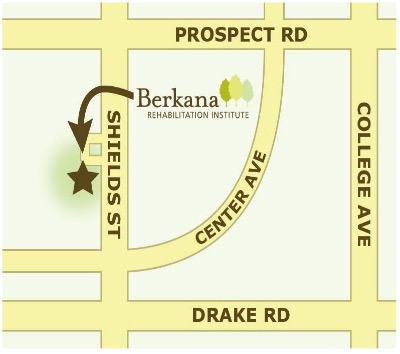
Berkana Rehabilitation, LLC is located at:
2001 S. Shields Street, Bldg A1,
Fort Collins, CO 80526